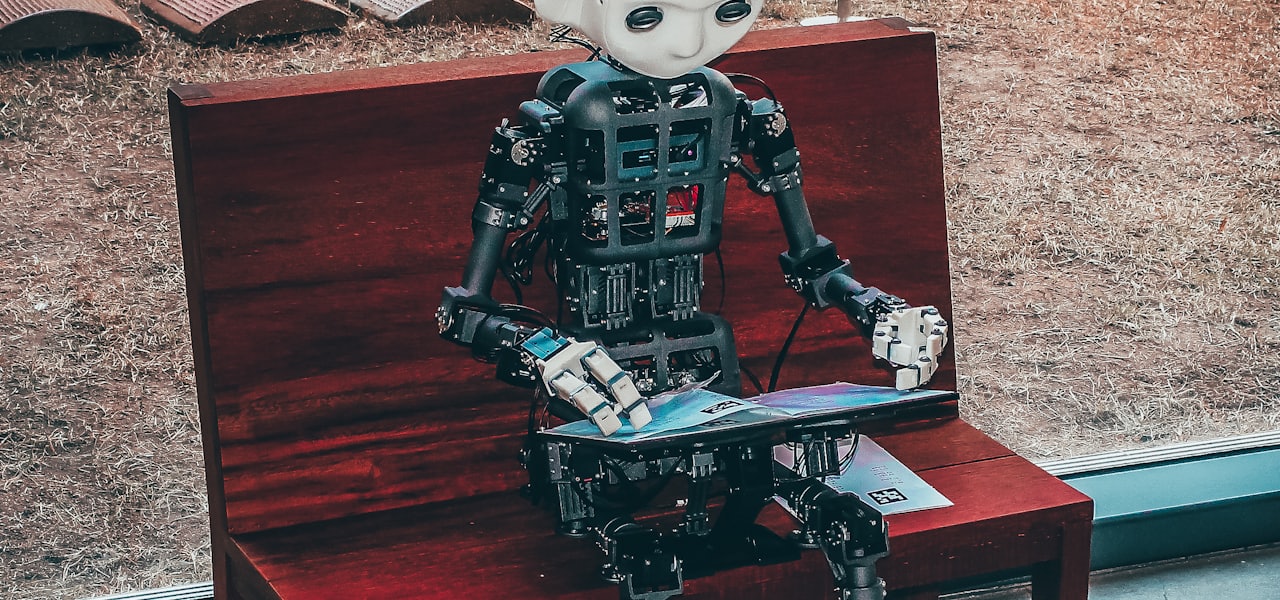
Machine translation is a sub-field of computational linguistics that investigates the use of software to translate text or speech from one natural language to another. In the 1950s, machine translation became a reality in research, although references to the subject can be found as early as the 17th century. The Georgetown experiment, which involved successful fully automatic translation of more than sixty Russian sentences into English in 1954, was one of the earliest recorded projects. Researchers of the Georgetown experiment asserted their belief that machine translation would be a solved problem within a few years. In the Soviet Union, similar experiments were performed shortly after. Consequently, the success of the experiment ushered in an era of significant funding for machine translation research in the United States. The achieved progress was much slower than expected; in 1966, the ALPAC report found that ten years of research had not fulfilled the expectations of the Georgetown experiment and resulted in dramatically reduced funding. Interest grew in statistical models for machine translation, which became more common and also less expensive in the 1980s as available computational power increased. Although there exists no autonomous system of "fully automatic high quality translation of unrestricted text," there are many programs now available that are capable of providing useful output within strict constraints. Several of these programs are available online, such as Google Translate and the SYSTRAN system that powers AltaVista's BabelFish (which was replaced by Microsoft Bing translator in May 2012). == The beginning == The origins of machine translation can be traced back to the work of Al-Kindi, a 9th-century Arabic cryptographer who developed techniques for systemic language translation, including cryptanalysis, frequency analysis, and probability and statistics, which are used in modern machine translation. The idea of machine translation later appeared in the 17th century. In 1629, René Descartes proposed a universal language, with equivalent ideas in different tongues sharing one symbol. In the mid-1930s the first patents for "translating machines" were applied for by Georges Artsrouni, for an automatic bilingual dictionary using punched tape. Russian Peter Troyanskii submitted a more detailed proposal that included both the bilingual dictionary and a method for dealing with grammatical roles between languages, based on the grammatical system of Esperanto. This system was separated into three stages: stage one consisted of a native-speaking editor in the source language to organize the words into their logical forms and to exercise the syntactic functions; stage two required the machine to "translate" these forms into the target language; and stage three required a native-speaking editor in the target language to normalize this output. Troyanskii's proposal remained unknown until the late 1950s, by which time computers were well-known and utilized. == The early years == The first set of proposals for computer based machine translation was presented in 1949 by Warren Weaver, a researcher at the Rockefeller Foundation, "Translation memorandum". These proposals were based on information theory, successes in code breaking during the Second World War, and theories about the universal principles underlying natural language. A few years after Weaver submitted his proposals, research began in earnest at many universities in the United States. On 7 January 1954 the Georgetown–IBM experiment was held in New York at the head office of IBM. This was the first public demonstration of a machine translation system. The demonstration was widely reported in the newspapers and garnered public interest. The system itself, however, was no more than a "toy" system. It had only 250 words and translated 49 carefully selected Russian sentences into English – mainly in the field of chemistry. Nevertheless, it encouraged the idea that machine translation was imminent and stimulated the financing of the research, not only in the US but worldwide. Early systems used large bilingual dictionaries and hand-coded rules for fixing the word order in the final output which was eventually considered too restrictive in linguistic developments at the time. For example, generative linguistics and transformational grammar were exploited to improve the quality of translations. During this period operational systems were installed. The United States Air Force used a system produced by IBM and Washington University in St. Louis, while the Atomic Energy Commission and Euratom, in Italy, used a system developed at Georgetown University. While the quality of the output was poor it met many of the customers' needs, particularly in terms of speed. At the end of the 1950s, Yehoshua Bar-Hillel was asked by the US government to look into machine translation, to assess the possibility of fully automatic high-quality translation by machines. Bar-Hillel described the problem of semantic ambiguity or double-meaning, as illustrated in the following sentence: Little John was looking for his toy box. Finally he found it. The box was in the pen. The word pen may have two meanings: the first meaning, something used to write in ink with; the second meaning, a container of some kind. To a human, the meaning is obvious, but Bar-Hillel claimed that without a "universal encyclopedia" a machine would never be able to deal with this problem. At the time, this type of semantic ambiguity could only be solved by writing source texts for machine translation in a controlled language that uses a vocabulary in which each word has exactly one meaning. == The 1960s, the ALPAC report and the seventies == Research in the 1960s in both the Soviet Union and the United States concentrated mainly on the Russian–English language pair. The objects of translation were chiefly scientific and technical documents, such as articles from scientific journals. The rough translations produced were sufficient to get a basic understanding of the articles. If an article discussed a subject deemed to be confidential, it was sent to a human translator for a complete translation; if not, it was discarded. A great blow came to machine-translation research in 1966 with the publication of the ALPAC report. The report was commissioned by the US government and delivered by ALPAC, the Automatic Language Processing Advisory Committee, a group of seven scientists convened by the US government in 1964. The US government was concerned that there was a lack of progress being made despite significant expenditure. The report concluded that machine translation was more expensive, less accurate and slower than human translation, and that despite the expenditures, machine translation was not likely to reach the quality of a human translator in the near future. The report recommended, however, that tools be developed to aid translators – automatic dictionaries, for example – and that some research in computational linguistics should continue to be supported. The publication of the report had a profound impact on research into machine translation in the United States, and to a lesser extent the Soviet Union and United Kingdom. Research, at least in the US, was almost completely abandoned for over a decade. In Canada, France and Germany, however, research continued. In the US the main exceptions were the founders of SYSTRAN (Peter Toma) and Logos (Bernard Scott), who established their companies in 1968 and 1970 respectively and served the US Department of Defense. In 1970, the SYSTRAN system was installed for the United States Air Force, and subsequently by the Commission of the European Communities in 1976. The METEO System, developed at the Université de Montréal, was installed in Canada in 1977 to translate weather forecasts from English to French, and was translating close to 80,000 words per day or 30 million words per year until it was replaced by a competitor's system on 30 September 2001. While research in the 1960s concentrated on limited language pairs and input, demand in the 1970s was for low-cost systems that could translate a range of technical and commercial documents. This demand was spurred by the increase of globalisation and the demand for translation in Canada, Europe, and Japan. == The 1980s and early 1990s == By the 1980s, both the diversity and the number of installed systems for machine translation had increased. A number of systems relying on mainframe technology were in use, such as SYSTRAN, Logos, Ariane-G5, and Metal. As a result of the improved availability of microcomputers, there was a market for lower-end machine translation systems. Many companies took advantage of this in Europe, Japan, and the USA. Systems were also brought onto the market in China, Eastern Europe, Korea, and the Soviet Union. During the 1980s there was a lot of activity in MT in Japan especially. With the fifth-generation co
Shearlet
In applied mathematical analysis, shearlets are a multiscale framework which allows efficient encoding of anisotropic features in multivariate problem classes. Originally, shearlets were introduced in 2006 for the analysis and sparse approximation of functions f ∈ L 2 ( R 2 ) {\displaystyle f\in L^{2}(\mathbb {R} ^{2})} . They are a natural extension of wavelets, to accommodate the fact that multivariate functions are typically governed by anisotropic features such as edges in images, since wavelets, as isotropic objects, are not capable of capturing such phenomena. Shearlets are constructed by parabolic scaling, shearing, and translation applied to a few generating functions. At fine scales, they are essentially supported within skinny and directional ridges following the parabolic scaling law, which reads length² ≈ width. Similar to wavelets, shearlets arise from the affine group and allow a unified treatment of the continuum and digital situation leading to faithful implementations. Although they do not constitute an orthonormal basis for L 2 ( R 2 ) {\displaystyle L^{2}(\mathbb {R} ^{2})} , they still form a frame allowing stable expansions of arbitrary functions f ∈ L 2 ( R 2 ) {\displaystyle f\in L^{2}(\mathbb {R} ^{2})} . One of the most important properties of shearlets is their ability to provide optimally sparse approximations (in the sense of optimality in ) for cartoon-like functions f {\displaystyle f} . In imaging sciences, cartoon-like functions serve as a model for anisotropic features and are compactly supported in [ 0 , 1 ] 2 {\displaystyle [0,1]^{2}} while being C 2 {\displaystyle C^{2}} apart from a closed piecewise C 2 {\displaystyle C^{2}} singularity curve with bounded curvature. The decay rate of the L 2 {\displaystyle L^{2}} -error of the N {\displaystyle N} -term shearlet approximation obtained by taking the N {\displaystyle N} largest coefficients from the shearlet expansion is in fact optimal up to a log-factor: ‖ f − f N ‖ L 2 2 ≤ C N − 2 ( log N ) 3 , N → ∞ , {\displaystyle \|f-f_{N}\|_{L^{2}}^{2}\leq CN^{-2}(\log N)^{3},\quad N\to \infty ,} where the constant C {\displaystyle C} depends only on the maximum curvature of the singularity curve and the maximum magnitudes of f {\displaystyle f} , f ′ {\displaystyle f'} and f ″ . {\displaystyle f''.} This approximation rate significantly improves the best N {\displaystyle N} -term approximation rate of wavelets providing only O ( N − 1 ) {\displaystyle O(N^{-1})} for such class of functions. Shearlets are to date the only directional representation system that provides sparse approximation of anisotropic features while providing a unified treatment of the continuum and digital realm that allows faithful implementation. Extensions of shearlet systems to L 2 ( R d ) , d ≥ 2 {\displaystyle L^{2}(\mathbb {R} ^{d}),d\geq 2} are also available. A comprehensive presentation of the theory and applications of shearlets can be found in. == Definition == === Continuous shearlet systems === The construction of continuous shearlet systems is based on parabolic scaling matrices A a = [ a 0 0 a 1 / 2 ] , a > 0 {\displaystyle A_{a}={\begin{bmatrix}a&0\\0&a^{1/2}\end{bmatrix}},\quad a>0} as a means to change the resolution, on shear matrices S s = [ 1 s 0 1 ] , s ∈ R {\displaystyle S_{s}={\begin{bmatrix}1&s\\0&1\end{bmatrix}},\quad s\in \mathbb {R} } as a means to change the orientation, and finally on translations to change the positioning. In comparison to curvelets, shearlets use shearings instead of rotations, the advantage being that the shear operator S s {\displaystyle S_{s}} leaves the integer lattice invariant in case s ∈ Z {\displaystyle s\in \mathbb {Z} } , i.e., S s Z 2 ⊆ Z 2 . {\displaystyle S_{s}\mathbb {Z} ^{2}\subseteq \mathbb {Z} ^{2}.} This indeed allows a unified treatment of the continuum and digital realm, thereby guaranteeing a faithful digital implementation. For ψ ∈ L 2 ( R 2 ) {\displaystyle \psi \in L^{2}(\mathbb {R} ^{2})} the continuous shearlet system generated by ψ {\displaystyle \psi } is then defined as SH c o n t ( ψ ) = { ψ a , s , t = a 3 / 4 ψ ( S s A a ( ⋅ − t ) ) ∣ a > 0 , s ∈ R , t ∈ R 2 } , {\displaystyle \operatorname {SH} _{\mathrm {cont} }(\psi )=\{\psi _{a,s,t}=a^{3/4}\psi (S_{s}A_{a}(\cdot -t))\mid a>0,s\in \mathbb {R} ,t\in \mathbb {R} ^{2}\},} and the corresponding continuous shearlet transform is given by the map f ↦ S H ψ f ( a , s , t ) = ⟨ f , ψ a , s , t ⟩ , f ∈ L 2 ( R 2 ) , ( a , s , t ) ∈ R > 0 × R × R 2 . {\displaystyle f\mapsto {\mathcal {SH}}_{\psi }f(a,s,t)=\langle f,\psi _{a,s,t}\rangle ,\quad f\in L^{2}(\mathbb {R} ^{2}),\quad (a,s,t)\in \mathbb {R} _{>0}\times \mathbb {R} \times \mathbb {R} ^{2}.} === Discrete shearlet systems === A discrete version of shearlet systems can be directly obtained from SH c o n t ( ψ ) {\displaystyle \operatorname {SH} _{\mathrm {cont} }(\psi )} by discretizing the parameter set R > 0 × R × R 2 . {\displaystyle \mathbb {R} _{>0}\times \mathbb {R} \times \mathbb {R} ^{2}.} There are numerous approaches for this but the most popular one is given by { ( 2 j , k , A 2 j − 1 S k − 1 m ) ∣ j ∈ Z , k ∈ Z , m ∈ Z 2 } ⊆ R > 0 × R × R 2 . {\displaystyle \{(2^{j},k,A_{2^{j}}^{-1}S_{k}^{-1}m)\mid j\in \mathbb {Z} ,k\in \mathbb {Z} ,m\in \mathbb {Z} ^{2}\}\subseteq \mathbb {R} _{>0}\times \mathbb {R} \times \mathbb {R} ^{2}.} From this, the discrete shearlet system associated with the shearlet generator ψ {\displaystyle \psi } is defined by SH ( ψ ) = { ψ j , k , m = 2 3 j / 4 ψ ( S k A 2 j ⋅ − m ) ∣ j ∈ Z , k ∈ Z , m ∈ Z 2 } , {\displaystyle \operatorname {SH} (\psi )=\{\psi _{j,k,m}=2^{3j/4}\psi (S_{k}A_{2^{j}}\cdot {}-m)\mid j\in \mathbb {Z} ,k\in \mathbb {Z} ,m\in \mathbb {Z} ^{2}\},} and the associated discrete shearlet transform is defined by f ↦ S H ψ f ( j , k , m ) = ⟨ f , ψ j , k , m ⟩ , f ∈ L 2 ( R 2 ) , ( j , k , m ) ∈ Z × Z × Z 2 . {\displaystyle f\mapsto {\mathcal {SH}}_{\psi }f(j,k,m)=\langle f,\psi _{j,k,m}\rangle ,\quad f\in L^{2}(\mathbb {R} ^{2}),\quad (j,k,m)\in \mathbb {Z} \times \mathbb {Z} \times \mathbb {Z} ^{2}.} == Examples == Let ψ 1 ∈ L 2 ( R ) {\displaystyle \psi _{1}\in L^{2}(\mathbb {R} )} be a function satisfying the discrete Calderón condition, i.e., ∑ j ∈ Z | ψ ^ 1 ( 2 − j ξ ) | 2 = 1 , for a.e. ξ ∈ R , {\displaystyle \sum _{j\in \mathbb {Z} }|{\hat {\psi }}_{1}(2^{-j}\xi )|^{2}=1,{\text{for a.e. }}\xi \in \mathbb {R} ,} with ψ ^ 1 ∈ C ∞ ( R ) {\displaystyle {\hat {\psi }}_{1}\in C^{\infty }(\mathbb {R} )} and supp ψ ^ 1 ⊆ [ − 1 2 , − 1 16 ] ∪ [ 1 16 , 1 2 ] , {\displaystyle \operatorname {supp} {\hat {\psi }}_{1}\subseteq [-{\tfrac {1}{2}},-{\tfrac {1}{16}}]\cup [{\tfrac {1}{16}},{\tfrac {1}{2}}],} where ψ ^ 1 {\displaystyle {\hat {\psi }}_{1}} denotes the Fourier transform of ψ 1 . {\displaystyle \psi _{1}.} For instance, one can choose ψ 1 {\displaystyle \psi _{1}} to be a Meyer wavelet. Furthermore, let ψ 2 ∈ L 2 ( R ) {\displaystyle \psi _{2}\in L^{2}(\mathbb {R} )} be such that ψ ^ 2 ∈ C ∞ ( R ) , {\displaystyle {\hat {\psi }}_{2}\in C^{\infty }(\mathbb {R} ),} supp ψ ^ 2 ⊆ [ − 1 , 1 ] {\displaystyle \operatorname {supp} {\hat {\psi }}_{2}\subseteq [-1,1]} and ∑ k = − 1 1 | ψ ^ 2 ( ξ + k ) | 2 = 1 , for a.e. ξ ∈ [ − 1 , 1 ] . {\displaystyle \sum _{k=-1}^{1}|{\hat {\psi }}_{2}(\xi +k)|^{2}=1,{\text{for a.e. }}\xi \in \left[-1,1\right].} One typically chooses ψ ^ 2 {\displaystyle {\hat {\psi }}_{2}} to be a smooth bump function. Then ψ ∈ L 2 ( R 2 ) {\displaystyle \psi \in L^{2}(\mathbb {R} ^{2})} given by ψ ^ ( ξ ) = ψ ^ 1 ( ξ 1 ) ψ ^ 2 ( ξ 2 ξ 1 ) , ξ = ( ξ 1 , ξ 2 ) ∈ R 2 , {\displaystyle {\hat {\psi }}(\xi )={\hat {\psi }}_{1}(\xi _{1}){\hat {\psi }}_{2}\left({\tfrac {\xi _{2}}{\xi _{1}}}\right),\quad \xi =(\xi _{1},\xi _{2})\in \mathbb {R} ^{2},} is called a classical shearlet. It can be shown that the corresponding discrete shearlet system SH ( ψ ) {\displaystyle \operatorname {SH} (\psi )} constitutes a Parseval frame for L 2 ( R 2 ) {\displaystyle L^{2}(\mathbb {R} ^{2})} consisting of bandlimited functions. Another example are compactly supported shearlet systems, where a compactly supported function ψ ∈ L 2 ( R 2 ) {\displaystyle \psi \in L^{2}(\mathbb {R} ^{2})} can be chosen so that SH ( ψ ) {\displaystyle \operatorname {SH} (\psi )} forms a frame for L 2 ( R 2 ) {\displaystyle L^{2}(\mathbb {R} ^{2})} . In this case, all shearlet elements in SH ( ψ ) {\displaystyle \operatorname {SH} (\psi )} are compactly supported providing superior spatial localization compared to the classical shearlets, which are bandlimited. Although a compactly supported shearlet system does not generally form a Parseval frame, any function f ∈ L 2 ( R 2 ) {\displaystyle f\in L^{2}(\mathbb {R} ^{2})} can be represented by the shearlet expansion due to its frame property. == Cone-adapted shearlets == One drawback of shearlets defined as above is the directional bias of shearlet elements associated with large shearing parameters. This effect is already r
Gapo
Gapo is a Vietnamese social networking service based in Hanoi, Vietnam. Users are able to create a personal profile and share text, photos and videos with others on the platform. Users can also use Gapo for live streaming, instant messaging, blogging, and online payments. Gapo was launched in July 2019 by Hà Trung Kiên and Duong Vi Khoa. == History == Gapo was founded in response to calls for Vietnam's Communist-led government to produce a domestic alternative to social media giants like Facebook and Google. Gapo officially launched on July 23, 2019 at an event in Hanoi. The company received 500 billion đồng (US$22 million) in funding from technology corporation G-Group to be utilized in the first phase of development. They also partnered with Sony Music Entertainment to provide music content to its services. == Features == Gapo features a news feed for posting content, livestreaming, instant messaging, and blogging. It also allows users to pay online and access public services. == Reception == Within two days of launch, Gapo received about 200,000 registrations. By September 2019, the user base increased to one million. Upon launch, Gapo experienced significant technical difficulties. Users complained about the inability to sign up for a new account and said that certain functions were not available for use at launch. This issue caused Gapo to temporarily suspend their services in order to perform upgrades and bug fixes. Gapo relaunched the next day, though many users reported that the access speed decreased. The mobile app also received mixed reviews from users in both the App Store and the Google Play Store, with an average rating of 3.1 and 3.5, respectively. Most users found the app to be a knockoff of Facebook, although some users praised the app for being locally developed. === Expert opinions on platform viability === Le Hong Hiep of the ISEAS - Yusof Ishak Institute was doubtful that a Vietnamese-owned social network service could be as powerful as a foreign-based service, stating that Vietnam might not be able to develop a viable social media network to compete with the likes of Facebook or Google. Others, like blogger Ann Chi, said that, due to local players complying with local censorship policy, there is a chance that locals might not trust Gapo and other local services in light of possible surveillance. Regarding the targeted user base figure for the end of 2019 and 2021, experts cautioned that the company might need an additional trillion đồng of funding to reach its planned user base targets. In response, the company stated that Gapo was never meant to compete with Facebook, but instead noted that the main difference between Gapo and Facebook is that Gapo provides a personalized user experience through customization. == Censorship == Gapo has the right to censor posts and news that are deemed offensive and inaccurate by users or not approved by the censorship curators.
Opponent process
The opponent process is a hypothesis of color vision that states that the human visual system interprets information about color by processing signals from the three types of photoreceptor cells in an antagonistic manner. The three types of cones are called L, M, and S. The names stand for "Long wavelength sensitive,” "middle wavelength sensitive," and "short wavelength sensitive." The opponent-process theory implicates three opponent channels: L versus M, S versus (L+M), and a luminance channel (+ versus -). These cone-opponent mechanisms were at one time thought to be the neural substrate for a psychological theory called Hering's Opponent Colors Theory, which calls for three psychologically important opponent color processes: red versus green, blue versus yellow, and black versus white (luminance). The Opponent Colors Theory is named for the German physiologist Ewald Hering who proposed the idea in the late 19th century. However, it has been argued that Hering’s Opponent Colors Theory lacks adequate phenomenological and empirical support, and may not be a necessary feature of normal human color experience. Correspondingly, considerable physiological and behavioral evidence proves that the physiological cone opponent mechanisms do not constitute the neurobiological basis for Hering's Opponent Colors Theory. == Color theory == === Complementary colors === When staring at a bright color for a while (e.g. red), then looking away at a white field, an afterimage is perceived, such that the original color will evoke its complementary color (cyan, in the case of red input). When complementary colors are combined or mixed, they "cancel each other out" and become neutral (white or gray). That is, complementary colors are never perceived as a mixture; there is no "greenish red" or "yellowish blue", despite claims to the contrary. The strongest color contrast that a color can have is its complementary color. Complementary colors may also be called "opposite colors" and they were originally considered the primary evidence in support of Hering's Opponent Colors Theory. There are two fatal problems with this evidence. First, the complement of red is not green, as called for by Hering's theory; it is bluish-green. And second, there exists a complementary color for every color, so there is nothing special about the set of complementary pairs picked out by Hering's theory. === Unique hues === The colors that define the extremes for each opponent channel are called unique hues, as opposed to composite (mixed) hues. Ewald Hering first defined the unique hues as red, green, blue, and yellow, and based them on the concept that these colors could not be simultaneously perceived. For example, a color cannot appear both red and green. These definitions have been experimentally refined and are represented today by average hue angles of 353° (carmine red), 128° (cobalt green), 228° (cobalt blue), 58° (yellow). The unique hues are a defining feature of many psychological color spaces, but there is substantial evidence showing that the unique hues are not hard wired in the nervous system, contrary to the stipulations of Hering's Opponent Colors Theory. Unique hues can differ between individuals and are often used in psychophysical research to measure variations in color perception due to color-vision deficiencies or color adaptation. While there is considerable inter-subject variability when defining unique hues experimentally, an individual's unique hues are very consistent, to within a few nanometers of wavelength. == Physiological basis == === Relation to LMS color space === The trichromatic theory is in conflict with Hering's Opponent Colors Theory, although it is compatible with a physiological opponent process that compares the outputs of the different classes of cone types. The poles of these cone opponent mechanisms do not correspond to the unique hues of Hering's Opponent Colors Theory and unlike the unique hues, have no privilege in color perception. Most humans have three different cone cells in their retinas that facilitate trichromatic color vision. Colors are determined by the proportional excitation of these three cone types, i.e. their quantum catch. The levels of excitation of each cone type are the parameters that define LMS color space. To calculate the opponent process tristimulus values from the LMS color space, the cone excitations must be compared: The luminous (achromatic) opponent channel is a weighted sum of all three cone cells (plus the rod cells in some conditions). The red–green opponent channel is equal to the difference of the L- and M-cones. The blue–yellow opponent channel is equal to the difference of the S-cone and the average/weighted sum of the L- and M-cones. Most mammals have no L cone (the primate L cone arose from a gene duplication of the M cone opsin gene). These mammals still show two kinds of opponent channels in their retinal ganglion cells: the achromatic channel and the blue-yellow opponency channel. === Cone opponent mechanisms are encoded in the retina === The output of different types of cones are compared by cells in the retina including retina bipolar cells (which compare signals from L and M cones) and bistratified retinal ganglion cells (which compare S cone signals with L and M cone signals). The output of bipolar cells is relayed to the visual cortex by the retinal ganglion cells (RGCs) by way of a thalamic relay station called the lateral geniculate nucleus (LGN) of the thalamus. Much of the scientific knowledge of retinal ganglion cell physiology was obtained by neural recordings of cells in the LGN. The cone-opponent mechanisms in the retina and LGN represent a fundamental physiological opponent process but do not represent the unique hues (or Hering's Opponent Colors Theory). For example, the colors that best elicit responses of the bistratified S-(L+M)-opponent neurons are best described as purplish (or lavender) and lime-green, not "blue" and "yellow". The neurons are sometimes referred to as "blue–yellow" neurons, but this is a historical artifact dating to the time when it was thought that Hering's Opponent Colors Theory was hardwired by the retina and the mismatch between the colors to which they are optimally tuned and Hering's Opponent Colors was overlooked. Cone opponent mechanisms exist in the retinas of many mammals, including monkeys, mice, and cats. In primates, the LGN contains three major classes of layers: Magnocellular layers (M, large-cell) – responsible largely for the luminance channel Parvocellular layers (P, small-cell) – responsible largely for red–green opponency Koniocellular layers (K) – responsible largely for blue–yellow opponency, poor spatial resolution, long latency Other mammals such as cats also have three cell types denoted as X (magno), Y (parvo), and W (konio). The W type is beyond most doubt homologous to the primate K type. There are some subtle differences between the M and X types as well as the Y and P types to make the correspondence unclear. === Advantage === Transmitting information in opponent-channel color space could be advantageous over transmitting it in LMS color space ("raw" signals from each cone type). There is some overlap in the wavelengths of light to which the three types of cones (L for long-wave, M for medium-wave, and S for short-wave light) respond, so it is more efficient for the visual system (from a perspective of dynamic range) to record differences between the responses of cones, rather than each type of cone's individual response. Hurvich and Jameson argued that the use of opponent-channel color space would increase color contrast, making the information easier to process by later stages of vision. === Color blindness === Color blindness can be classified by the cone cell that is affected (protan, deutan, tritan) or by the opponent channel that is affected (red–green or blue–yellow). In either case, the channel can either be inactive (in the case of dichromacy) or have a lower dynamic range (in the case of anomalous trichromacy). For example, individuals with deuteranopia see little difference between the red and green unique hues. == History == Johann Wolfgang von Goethe first studied the physiological effect of opposed colors in his Theory of Colours in 1810. Goethe arranged his color wheel symmetrically "for the colours diametrically opposed to each other in this diagram are those which reciprocally evoke each other in the eye. Thus, yellow demands purple; orange, blue; red, green; and vice versa: Thus again all intermediate gradations reciprocally evoke each other." Ewald Hering proposed opponent color theory in 1892. He thought that the colors red, yellow, green, and blue are special in that any other color can be described as a mix of them, and that they exist in opposite pairs. That is, either red or green is perceived and never greenish-red: Even though yellow is a mixture of red and green in the RGB color theory, humans
List of video editing software
The following is a list of video editing software. The criterion for inclusion in this list is the ability to perform non-linear video editing. Most modern transcoding software supports transcoding a portion of a video clip, which would count as cropping and trimming. However, items in this article have one of the following conditions: Can perform other non-linear video editing function such as montage or compositing Can do the trimming or cropping without transcoding == Free (libre) or open-source == The software listed in this section is either free software or open source, and may or may not be commercial. === Active and stable === === Inactive === == Proprietary (non-commercial) == The software listed in this section is proprietary, and freeware or freemium. === Active === === Discontinued === == Proprietary (commercial) == The software listed in this section is proprietary and commercial. === Active === === Discontinued ===
Hallucination (artificial intelligence)
In the field of artificial intelligence (AI), a hallucination or artificial hallucination (also called bullshitting, confabulation, or delusion) is a response generated by AI that contains false or misleading information presented as fact. This term draws a loose analogy with human psychology, where a hallucination typically involves false percepts. For example, a chatbot powered by large language models (LLMs), like ChatGPT, may embed plausible-sounding random falsehoods within its generated content. Detecting and mitigating errors and hallucinations pose significant challenges for practical deployment and reliability of LLMs in high-stakes scenarios, such as chip design, supply chain logistics, and medical diagnostics. Some software engineers and statisticians have criticized the specific term "AI hallucination" for unreasonably anthropomorphizing computers. Symbolic artificial intelligence models generally do not produce hallucinations, unlike large language models. == Term == === Origin === Since the 1980s, the term "hallucination" has been used in computer vision with a positive connotation to describe the process of adding detail to an image. For example, the task of generating high-resolution face images from low-resolution inputs is called face hallucination. The first documented use of the term "hallucination" in this sense is in the PhD thesis of Eric Mjolsness in 1986. A notable work is the face hallucination algorithm by Simon Baker and Takeo Kanade published in 1999. In the 2000s, hallucinations were described in statistical machine translation as a failure mode. Since the 2010s, the term has undergone a semantic shift to signify the generation of factually incorrect or misleading outputs by AI systems in tasks like machine translation and object detection. In 2015, hallucinations were identified in visual semantic role labeling tasks by Saurabh Gupta and Jitendra Malik. In 2015, computer scientist Andrej Karpathy used the term "hallucinated" in a blog post to describe his recurrent neural network (RNN) language model generating an incorrect citation link. In 2017, Google researchers used the term to describe the responses generated by neural machine translation (NMT) models when they are not related to the source text, and in 2018, the term was used in computer vision to describe instances where non-existent objects are erroneously detected because of adversarial attacks. In July 2021, Meta warned during its release of BlenderBot 2 that the system is prone to "hallucinations", which Meta defined as "confident statements that are not true". Following OpenAI's ChatGPT release in beta version in November 2022, some users complained that such chatbots often seem to pointlessly embed plausible-sounding random falsehoods within their generated content. Many news outlets, including The New York Times, started to use the term "hallucinations" to describe these models' frequently incorrect or inconsistent responses. In 2023, the Cambridge dictionary updated its definition of hallucination to include this new sense specific to the field of AI. Some researchers have highlighted a lack of consistency in how the term is used, but also identified several alternative terms in the literature, such as confabulations, fabrications, and factual errors. === Definitions and alternatives === Uses, definitions and characterizations of the term "hallucination" in the context of LLMs include: "a tendency to invent facts in moments of uncertainty" (OpenAI, May 2023) "a model's logical mistakes" (OpenAI, May 2023) "fabricating information entirely, but behaving as if spouting facts" (CNBC, May 2023) "making up information" (The Verge, February 2023) "probability distributions" (in scientific contexts) Journalist Benj Edwards, in Ars Technica, writes that the term "hallucination" is controversial, but that some form of metaphor remains necessary; Edwards suggests "confabulation" as an analogy for processes that involve "creative gap-filling". In July 2024, a White House report on fostering public trust in AI research mentioned hallucinations only in the context of reducing them. Notably, when acknowledging David Baker's Nobel Prize-winning work with AI-generated proteins, the Nobel committee avoided the term entirely, instead referring to "imaginative protein creation". Hicks, Humphries, and Slater, in their article in Ethics and Information Technology, argue that the output of LLMs is "bullshit" under Harry Frankfurt's definition of the term, and that the models are "in an important way indifferent to the truth of their outputs", with true statements only accidentally true, and false ones accidentally false. Some researchers also use the derogatory term "botshit", often referring to uncritical use of AI. === Criticism === In the scientific community, some researchers avoid the term "hallucination", seeing it as potentially misleading. It has been criticized by Usama Fayyad, executive director of the Institute for Experimental Artificial Intelligence at Northeastern University, on the grounds that it misleadingly personifies large language models and is vague. Mary Shaw said, "The current fashion for calling generative AI's errors 'hallucinations' is appalling. It anthropomorphizes the software, and it spins actual errors as somehow being idiosyncratic quirks of the system even when they're objectively incorrect." In Salon, statistician Gary Smith argues that LLMs "do not understand what words mean" and consequently that the term "hallucination" unreasonably anthropomorphizes the machine. Murray Shanahan argues that anthropomorphic framing of LLM capabilities, including terms like "hallucination", encourages users and researchers to attribute cognitive processes to systems that operate through statistical pattern completion, and advocates for more careful linguistic practices when discussing LLM behavior. Kristina Šekrst argues that applying psychological vocabulary to LLM outputs obscures the difference between the appearance of mental properties and their genuine presence. Förster & Skop assert that tech companies use the hallucination metaphor to anthropomorphize models and deflect responsibility for non-factual outputs. Some see the AI outputs not as illusory but as prospective—that is, having some chance of being true, similar to early-stage scientific conjectures. The term has also been criticized for its association with psychedelic drug experiences. == In natural language generation == In natural language generation, there are several reasons why natural language models hallucinate: === Hallucination from data === Hallucinations can stem from incomplete, inaccurate or unrepresentative data sets. === Modeling-related causes === The pre-training of generative pretrained transformers (GPT) involves predicting the next word. It incentivizes GPT models to "give a guess" about what the next word is, even when they lack information. Some researchers take an anthropomorphic perspective and posit that hallucinations arise from a tension between novelty and usefulness. For instance, Amabile and Pratt define human creativity as the production of novel and useful ideas. By extension, a focus on novelty in machine creativity can lead to the production of original but inaccurate responses—that is, falsehoods—whereas a focus on usefulness may result in memorized content lacking originality. By 2022, newspapers such as The New York Times expressed concern that, as the adoption of bots based on large language models continued to grow, unwarranted user confidence in bot output could lead to problems. === Interpretability research === In 2025, interpretability research by Anthropic on the LLM Claude identified internal circuits that cause it to decline to answer questions unless it knows the answer. By default, the circuit is active and the LLM doesn't answer. When the LLM has sufficient information, these circuits are inhibited and the LLM answers the question. Hallucinations were found to occur when this inhibition happens incorrectly, such as when Claude recognizes a name but lacks sufficient information about that person, causing it to generate plausible but untrue responses. === Examples === On 15 November 2022, researchers from Meta AI published Galactica, designed to "store, combine and reason about scientific knowledge". Content generated by Galactica came with the warning: "Outputs may be unreliable! Language Models are prone to hallucinate text." In one case, when asked to draft a paper on creating avatars, Galactica cited a fictitious paper from a real author who works in the relevant area. Meta withdrew Galactica on 17 November due to offensiveness and inaccuracy. OpenAI's ChatGPT, released in beta version to the public on November 30, 2022, was based on the foundation model GPT-3.5 (a revision of GPT-3). Professor Ethan Mollick of Wharton called it an "omniscient, eager-to-please intern who sometimes lies to you". Data scientist Teresa Kuba
Softwarp
Softwarp is a software technique to warp an image so that it can be projected on a curved screen. This can be done in real time by inserting the softwarp as a last step in the rendering cycle. The problem is to know how the image should be warped to look correct on the curved screen. There are several techniques to auto calibrate the warping by projecting a pattern and using cameras and/or sensors. The information from the sensors is sent to the software so that it can analyze the data and calculate the curvature of the projection screen. == Usage == The softwarp can be used to project virtual views on curved walls and domes. These are usually used in vehicle simulators, for instance boat-, car- and airplane simulators. To make it possible to cover a dome with a 360 degree view you need to use several projectors. A problem with using several projectors on the same screen is that the edges between the projected images get about twice the amount of light. This is solved by using a technique called edge blending. With this technique a “filter” is inserted on the edge that fades the image from 100% light strength (luminance) to 0% (the lowest luminance depends on the contrast ratio of the projector). == History == The first warping technologies used a hardware image processing unit to warp the image. This processing unit was inserted between the graphics card and the projector. The problem with this technique is that it depends on the type of signal and the quality of the signal from the graphics card to warp it correctly. The process unit also needs several lines of image information before it can start sending out the warped image. This adds a latency to the display system that could be a problem in simulators that need fast response time, for instance fighter jet simulators. Softwarping eliminates the latency.